About Cruise Metrics: Data over deck chairs
If you’ve ever booked a cruise based on a glossy brochure only to find yourself fighting for a sun lounger at 7:00 AM, you’ve experienced the gap between marketing and mathematics.
I’m the creator of Cruise Metrics. By day, I’m a Data Analyst—someone who spends 40 hours a week finding the “truth” hidden in spreadsheets. By night and during my holidays, I am a regular cruiser and have been for the last 15 years. I have been doing on average about 5 to 6 cruises a year. I love the ocean, the itineraries (some more than others of course), and the engineering of these massive vessels. However, I don’t like being treated like a statistic by cruise line marketing departments and I rather find true value through extensive analysis of the ships, the statistics and ofcourse the price paid.
Why this site exists
I started this website as a personal hobby because I grew tired of travel agents using words like “vibrant” or “cozy” to describe ships that were, frankly, overcrowded.
In my professional life, data doesn’t have an ego, and it doesn’t earn a commission. It just is. I realized that if you apply a few specific formulas to a ship’s technical specifications—specifically Gross Tonnage, Passenger Capacity, and Crew Count—the “feel” of a cruise becomes predictable before you even step onto the gangway. Ofcourse, these statistics alone, don’t make or break a ship, as there are other factors to consider before booking your perfect getaway. However, the data does often narrow down towards a specific direction, making it easier to pick the best ship for you.
The methodology (Without the boredom)
You don’t need a degree in marine engineering to use this site, as this is something I, myself don’t have. However I’ve done the heavy lifting by providing you with metrics, using extensive data analysis on the various ships widely available information helping you decide the best ship for your ideal holiday. Please do remember the website is very heavily oriented at using statistics, and not at human sentiment towards a specific ship.
No sales, just statistics
Cruising is expensive, and your time is valuable. I don’t sell cruises, I don’t take commissions, and I’m not here to tell you which ship is “the best.”
Instead, I look at the data, and inform you about the raw statistics, allowing you to make a more informed choice, and hopefully allowing you to have the best holiday you could think of.
Where the Data Comes From
In the shipping industry, data isn’t hidden, but it is often buried under layers of technical jargon and PDFs meant for maritime lawyers rather than holidaymakers.
The statistics used across Cruise Metrics are meticulously sourced from public and verified records, including:
- Classification Societies & Registries: Official technical specifications (Gross Tonnage, length, and beam) filed with maritime authorities.
- Cruise Line Investor Relations: Financial and operational reports, which provide the most accurate, legally binding figures for double occupancy and maximum passenger capacity.
- Shipyard Blueprints: Historical data from the builders (such as Meyer Werft, Fincantieri, and Chantiers de l’Atlantique) detailing the original design parameters of each vessel.
By stripping away the marketing adjectives and pulling directly from these objective, foundational sources, the data remains unbiased, uninfluenced by commissions, and entirely transparent.
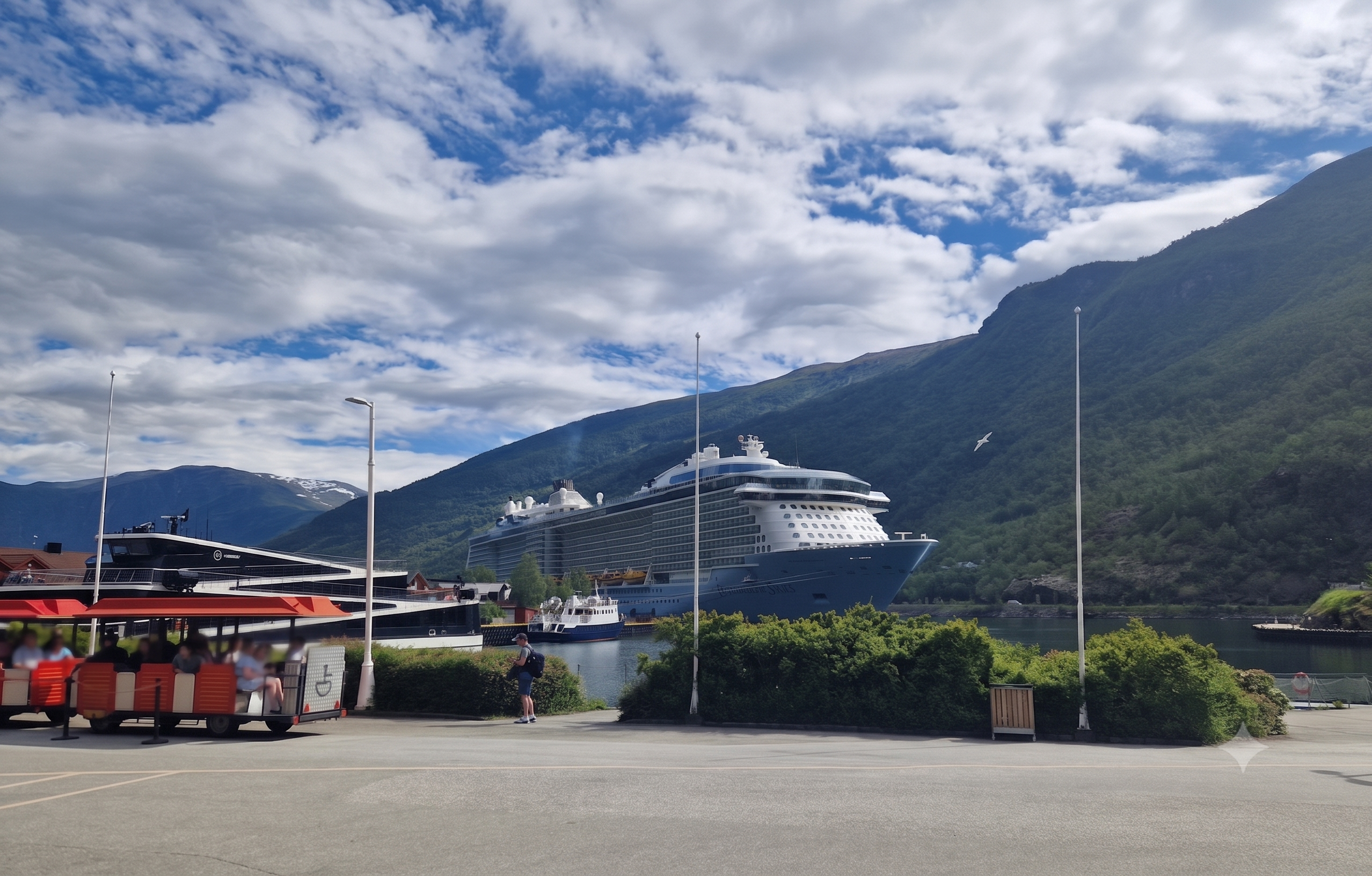
Our view of Royal Caribbean’s Anthem of the Seas during a recent port day.

Our view of Royal Caribbean’s Anthem of the Seas during a recent port day.